
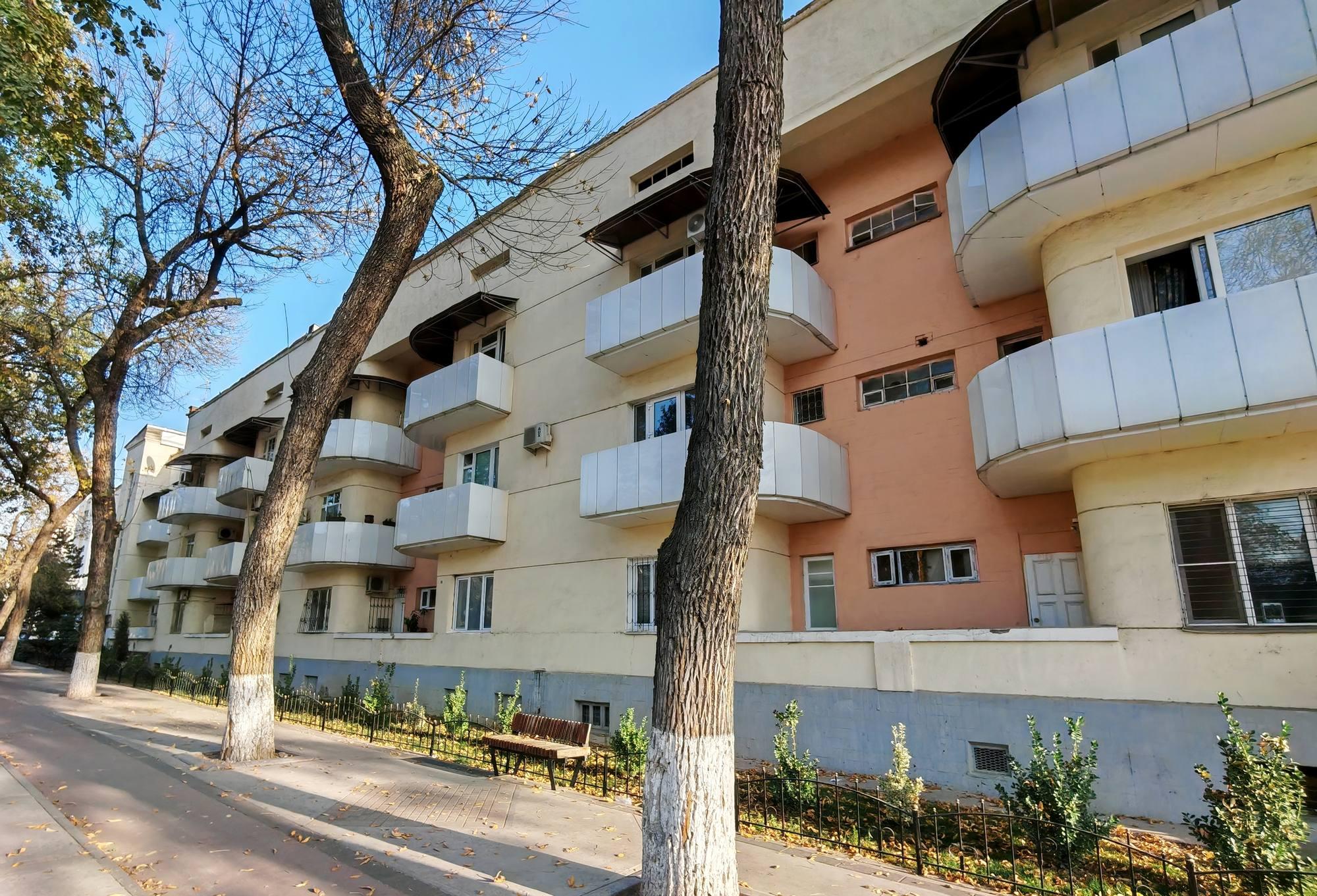
The residential building on the former Pushkin Street was built in 1931 according to the design of architect K. Babievsky. The house is a representative of constructivism, drawing attention with its unusual appearance. The central entrance faces the road, while the others open into the courtyard. This was the first residential building intended to be equipped with an elevator, and only in the central entrance; installation began, but the idea was abandoned.
According to residents’ recollections, the
Tashkent Soviet Executive Committee rejected the house design, but due to the
transfer of the capital to Tashkent, employees of the Cotton Research Institute
needed urgent housing, and there was no time to revise the project.
The building was brick and unplastered,
remembered by everyone as dark and soot-covered. During the street’s
reconstruction, it was “refined” by decorating the balconies with alucobond,
losing its original brutal appearance. The old brickwork can still be seen in
the courtyard — only the front facade was refined.
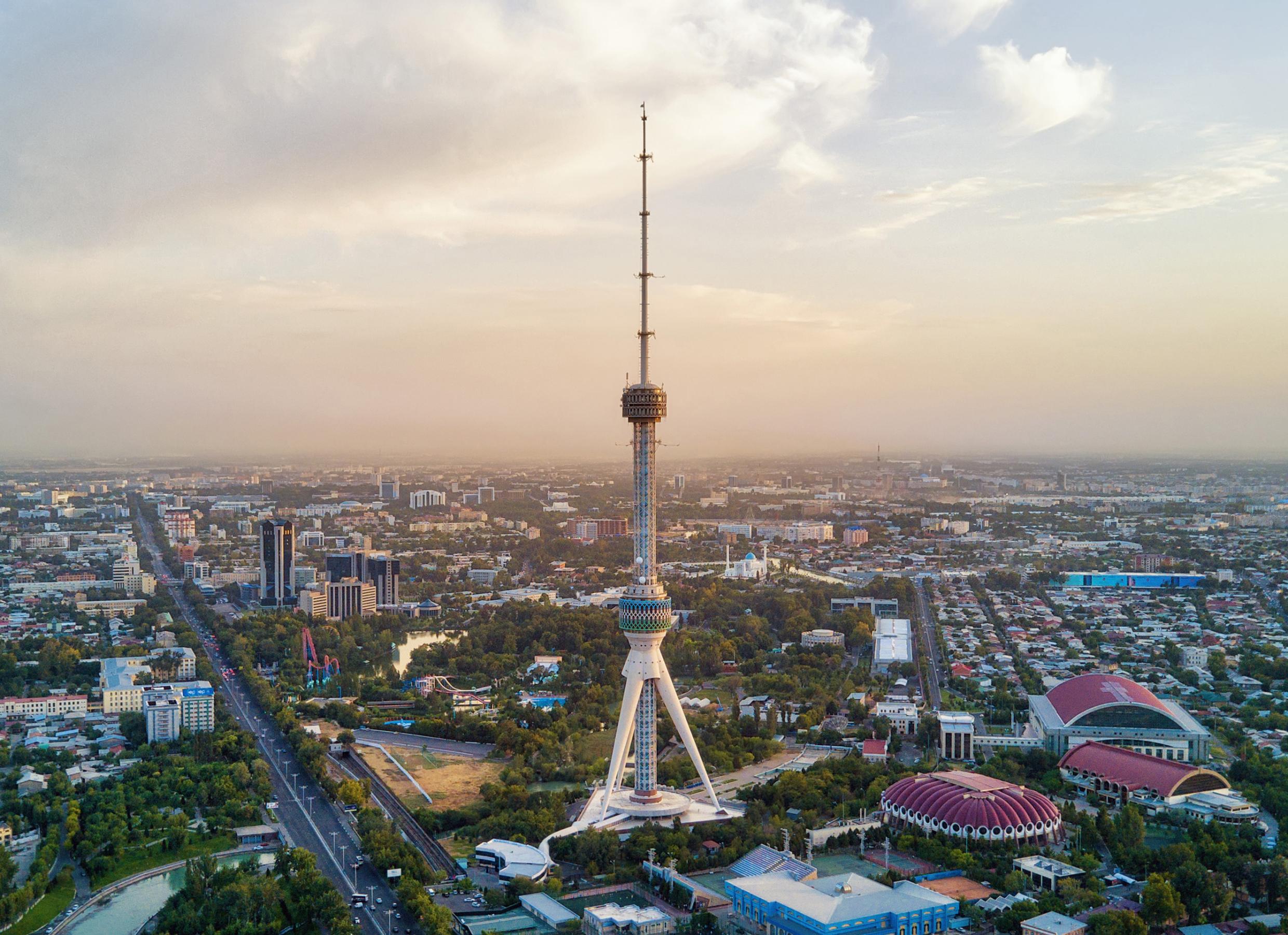
In January 2025, one of Tashkent’s symbols — our TV tower — turned 40 years old. Originally design...
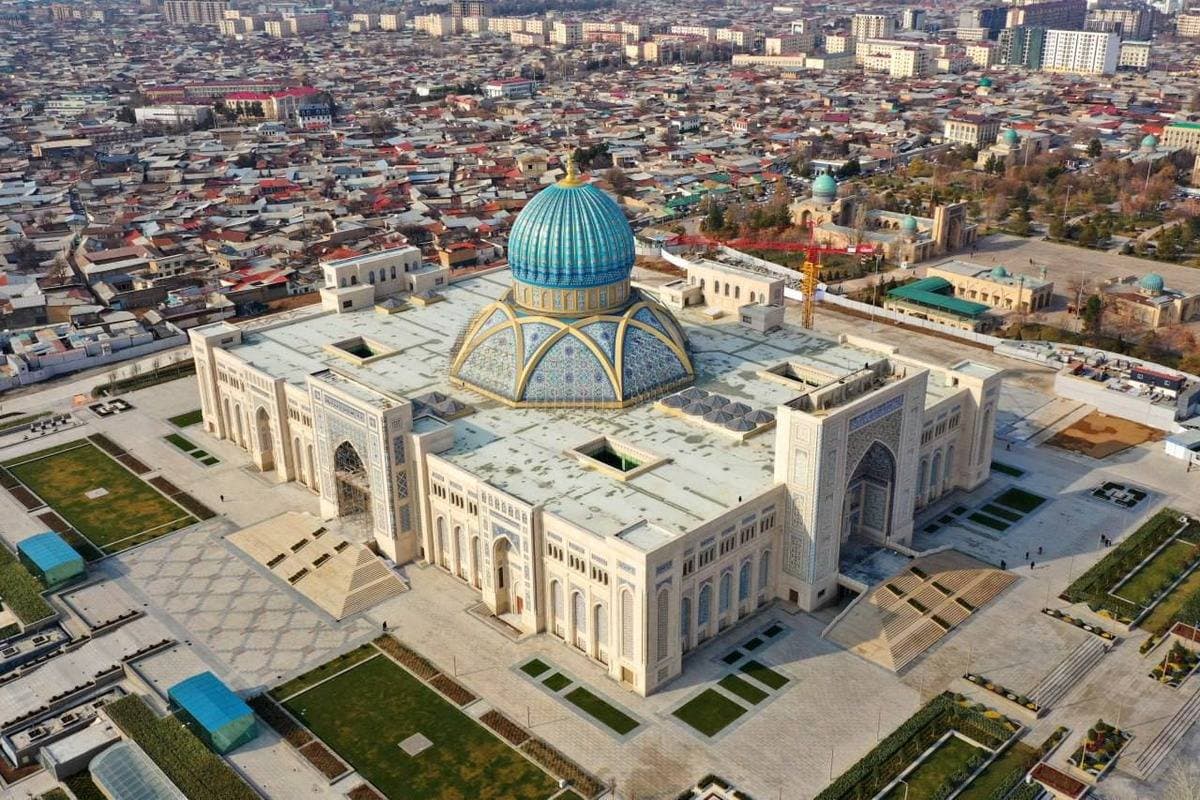
A unique international scientific and educational complex located near the Hast-Imam ensemble – a ...
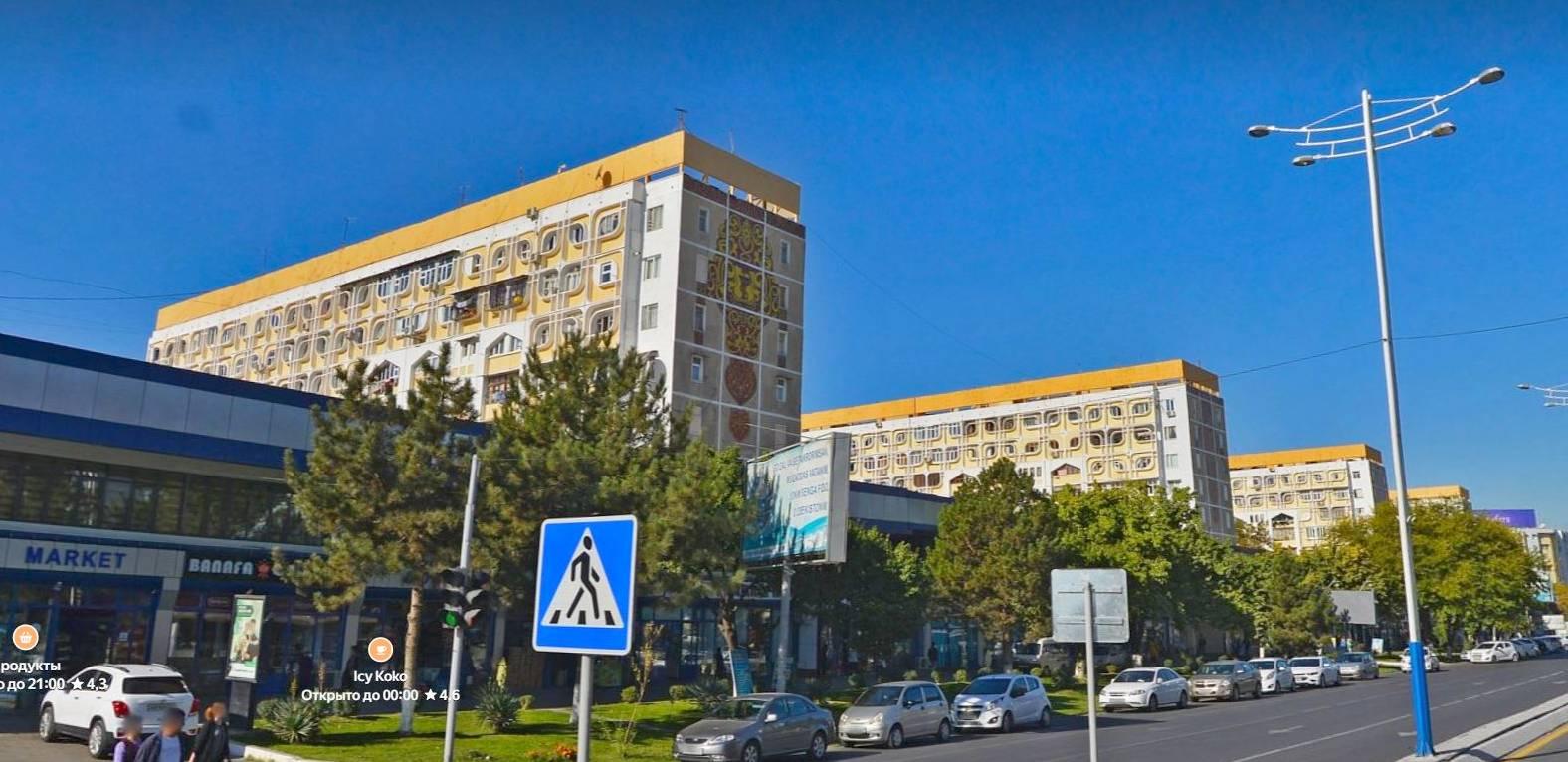
The distinctive buildings of the Bogkucha housing estate were designed by architects G. Korobtsev, ...

The Seamstresses’ Palace of Culture from the “Red Dawn” sewing factory was built in 1936 according ...